I had ten sightings during eight years of searching several months per year, but several of them were clustered during a short period in February 2006, and one of them was at a site in Florida where Geoff Hill and his colleagues had recently had a series of sightings. I was fortunate to have any sightings at all. I could have easily missed the birds if they had been using another area just a short distance from English Bayou. There is no substitute for spending long periods of time searching through appropriate habitat. As John Fitzpatrick and his colleagues demonstrated in Arkansas, it can be effective to spend that time moving silently through the swamp in a kayak. Discussed here are some additional ideas that can be useful for searching.
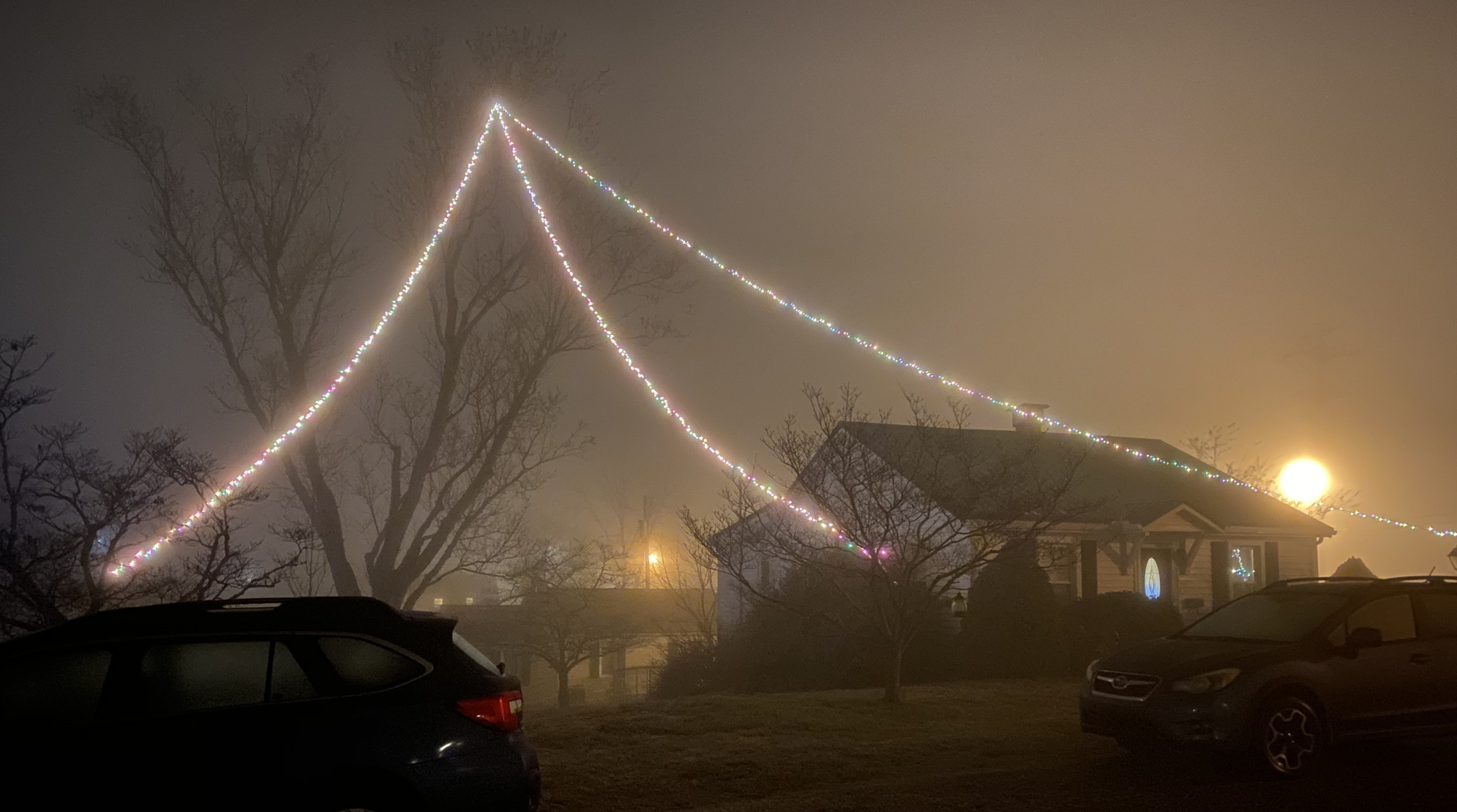
Climbing Trees. In 2007, I started using tall trees to keep watch over much larger areas than are visible from the ground. I was hoping to obtain a video of an Ivory-billed Woodpecker similar to this video of a Pileated Woodpecker flying over the treetops in the distance. The approach ended up working, but not as I had expected. In June of that year, Steve Sillett, Jim Spickler, and Michael Taylor came to the Pearl River to get me started with this approach. In this video, Steve and Jim are rigging a tree that is located a short distance up the bayou from a site where I had a series of sightings in 2006. Less than a year later, I was keeping watch from 75 feet up that tree when an Ivory-billed Woodpecker flew up the bayou and passed nearly directly below. I obtained lots of video footage and images during observation sessions in the trees, which provide stunning views of the habitats. The first step of the approach that Steve and Jim use to rig trees is to shoot an arrow attached to a fishing line over a high branch. I have used the same approach to put Christmas lights up in trees. I can still remember my first tree climbing experience, which was around 1963.
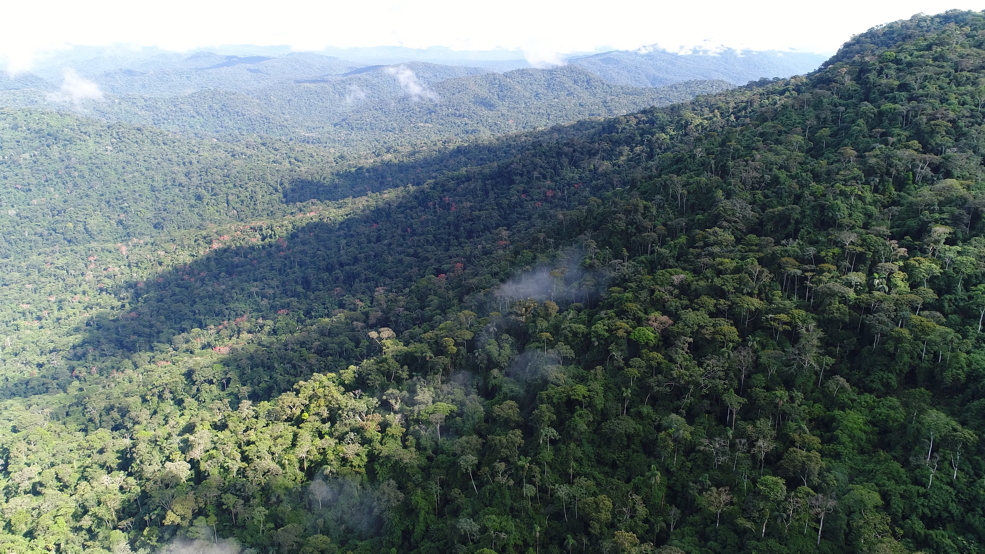
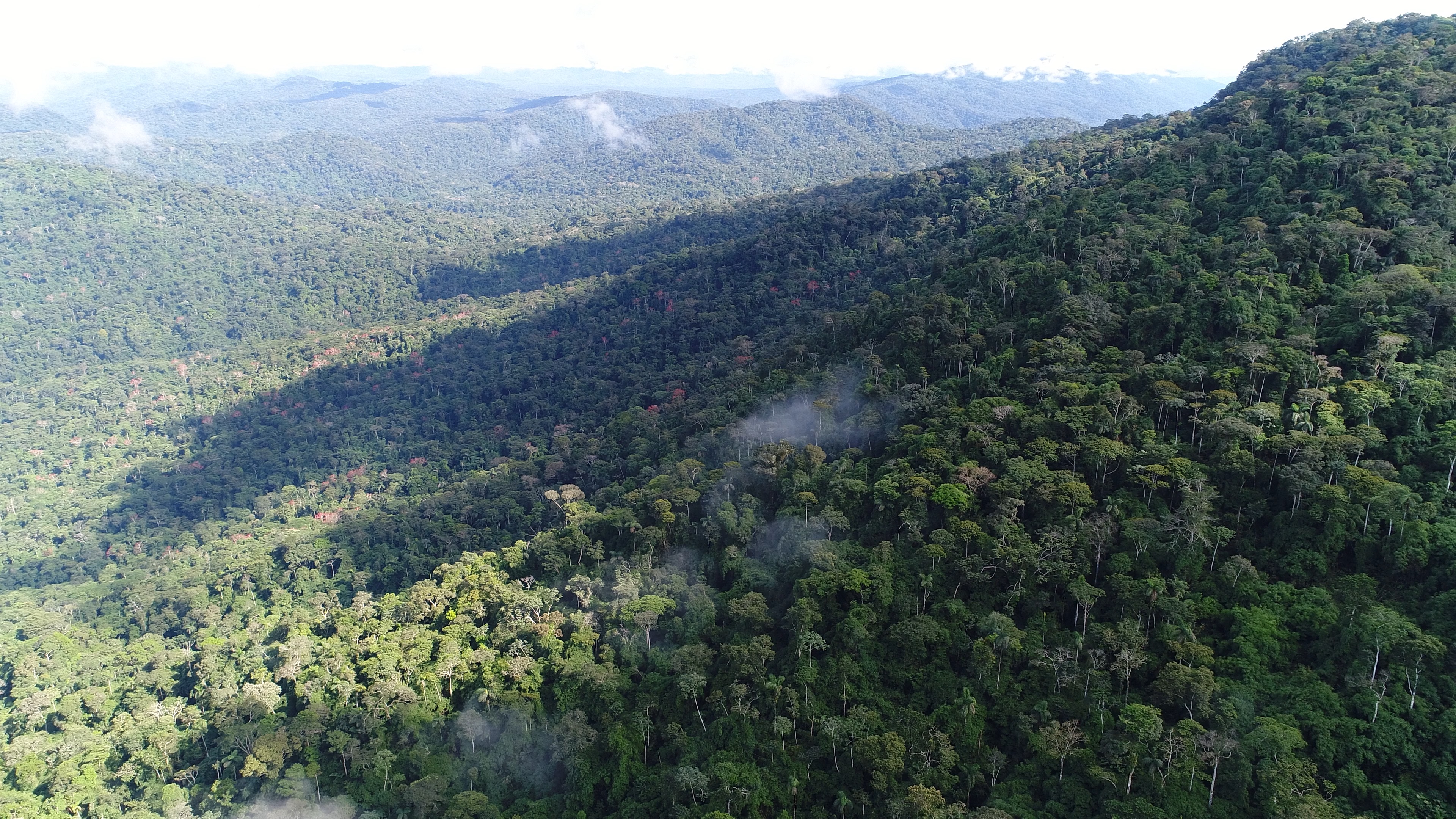
Imaging Natural Habitats with a Drone. Drones are useful for obtaining videos and photos of natural habitats. The above photo of a vast expanse of pristine habitat was obtained near Rio Madre de Dios in Peru (click here for a larger version). As discussed in this article, I have used drones to obtain videos and photos of habitats where there had been recent sightings of Ivory-billed Woodpeckers. In areas appearing in this image of English Bayou in the Pearl River swamp, Ivory-billed Woodpeckers were observed seven times in 2006 and twice in 2008; video footage was obtained during encounters at sites on the lower left (February 20, 2006) and near the center (March 29, 2008). In areas appearing in this image of the Bruce Creek area in the Choctawhatchee River swamp, Ivory-billed Woodpeckers were observed several times between 2005 and 2007 (one of the sightings was by an ornithologist); video footage was obtained during an encounter with a pair of Ivory-billed Woodpeckers near the center of the image (January 19, 2007). I have also used drones to obtain video footage of the approaching shadow of the eclipses of 2017 and 2024, the Hillsborough River swamp in Florida, an Easter egg hunt, autumn colors in the Appalachians, Palisade Falls in Montana, and the Pennsylvania towns of Greenville and Jamestown.
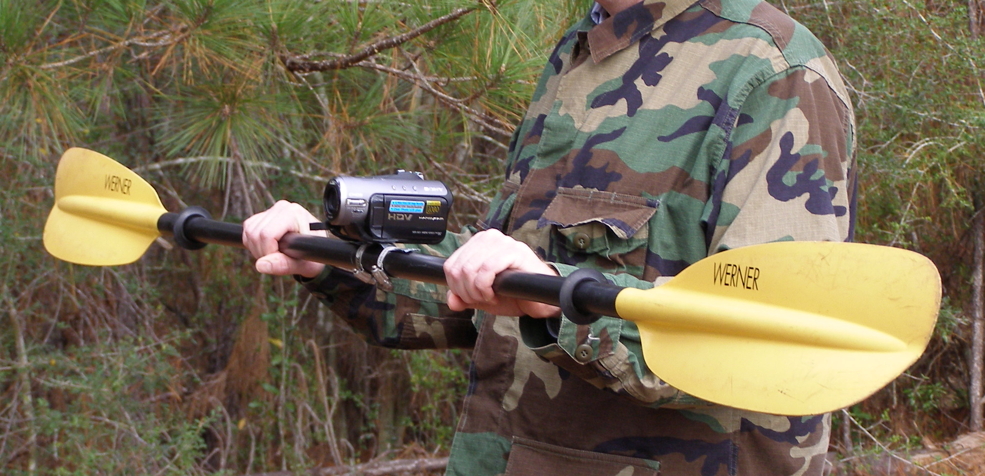
Paddle-Cam. During my first year in the Pearl River, I had multiple encounters with Ivory-billed Woodpeckers during which it would have been possible to get a clear photo if I had been holding a camera rather than kayak paddles. As illustrated in artistic recreations, I had close encounters with Ivory-billed Woodpeckers that flushed from nearby on the bank and glided low across the bayou. There was no time to put down the kayak paddles and grab a camera. Those encounters led to the idea to mount a high-def video camera on the kayak paddles (as shown in the above image) and keep it recording at all times. I never had any further sightings at close range, but I obtained the 2007 video with the paddle-cam.
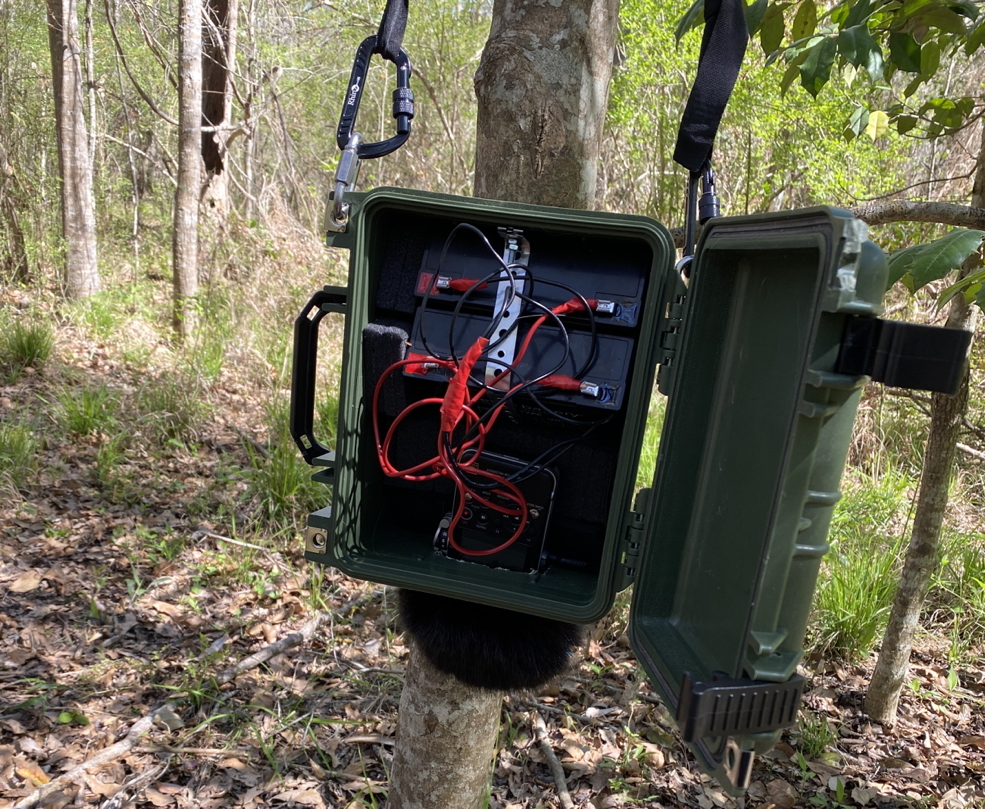
Audio Recorders. Due to a lack of complexity, the kent calls and double knocks of the Ivory-billed Woodpecker are not reliable for documentation, but they can be useful as an indication that the species may be present. John Fitzpatrick and his colleagues were deploying audio recorders in southern swamp forests more than 20 years ago. Geoff Hill and his colleagues recorded many apparent kents and double knocks in the Choctawhatchee River swamp. I developed an audio system that appears in the above image. It is based on a high-quality recorder, the Sony PCM-D100, and external batteries that allow for more than a week of recording. Everything is sealed in a water-proof case with the microphones sticking out from the bottom. I have never had any problems with this system, which has been exposed to heavy storms, such as this one. My approach has been to place the recorders in remote areas with good habitat. The audio track of this video was obtained with one of the recorders. I have recorded apparent double knocks (such as this one), but this approach has not yet paid off (in terms of a sighting) for me. I have also deployed the audio recorders at other locations, such as jungles in Peru and Brazil, a spruce bog in Ontario, and near a Magellanic Woodpecker nest in Patagonia (wingbeats at 0:19, unusual wing sounds during a swooping landing at 3:42, more wingbeats at 4:43, distant double knock at 9:15).
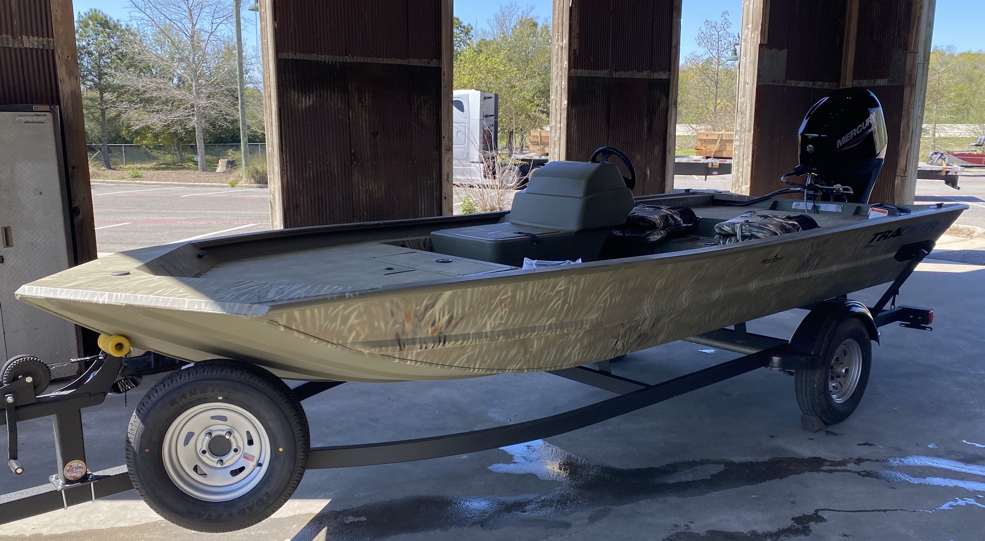
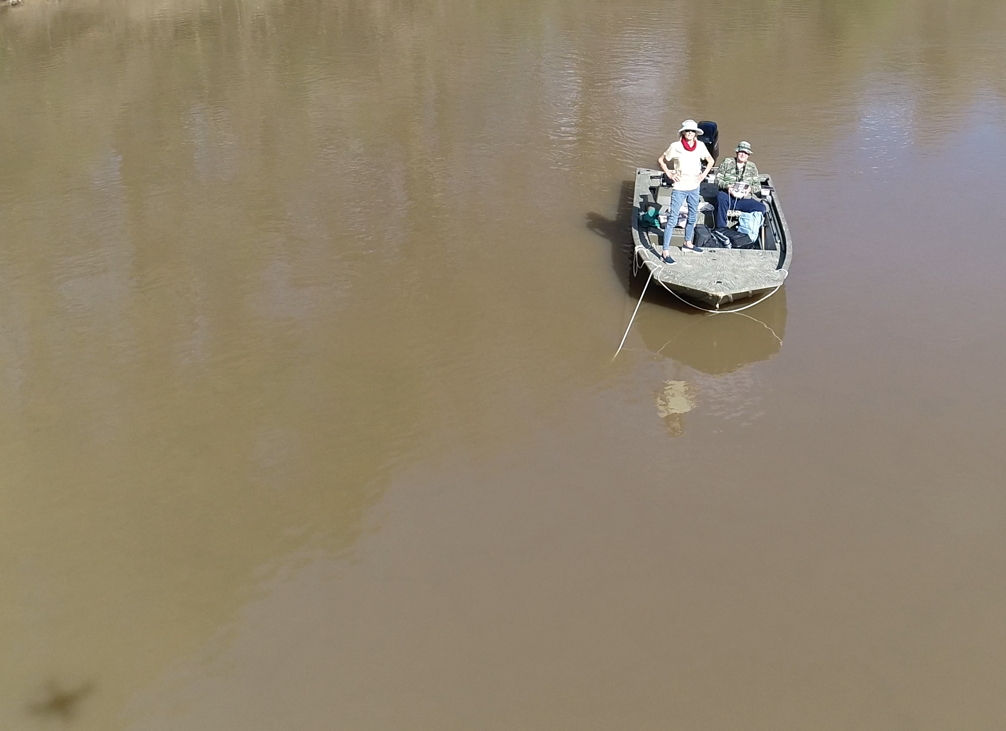
Motor Boat. On some days, I did kayak trips of more than ten miles, which can be exhausting when going against a current and carrying gear. A motorboat makes it easy to travel long distances with a heavy load of gear to remote locations up and down a river. After retiring in 2025, I obtained the Tracker Grizzly 1754 SC appearing in the above image. It has a 9.5 gallon inboard gas tank, 60 hp motor, top speed of well over 30 mph, and range of over 50 miles on a full tank. I have taken this rugged boat into water that is less than a foot deep. It is great for deploying the audio recorders in remote locations and for launching a drone to inspect habitats from above.
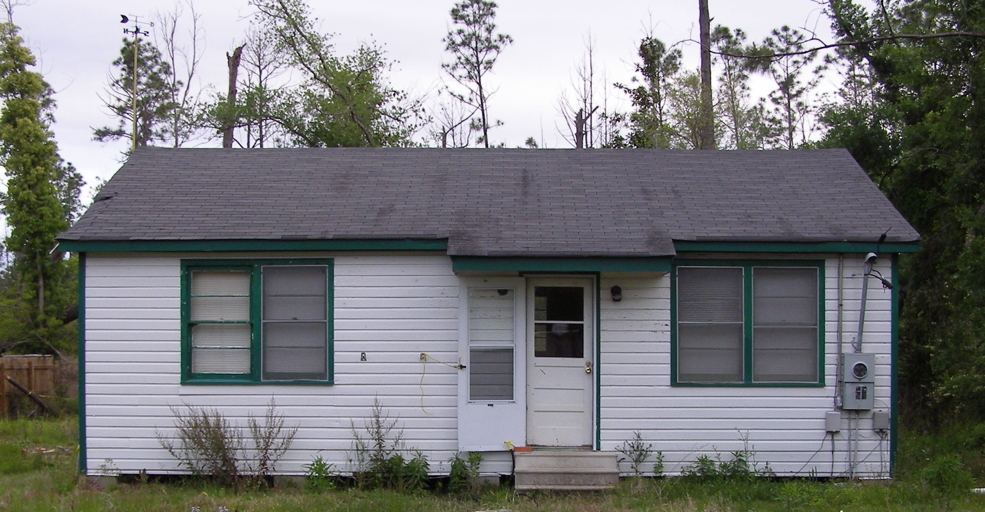
Residing in the Area. It isn’t realistic to expect to have a sighting during a brief visit to the swamp. According to John Dennis, who found and photographed Ivory-billed Woodpeckers in Cuba in 1948 and had sightings in Florida and Texas in the decades that followed, “It takes a couple of years to search out and find the ivorybill in only a single swamp.” One of the keys to my success was that I resided near the Pearl River for eight years. During the first year, I was allowed to sleep in my office (as were all employees in the aftermath of Hurricane Katrina) at Stennis Space Center, which is located on the Pearl River. That year, I was able to get out in the kayak within minutes of waking up each morning, and I found a pair of Ivory-billed Woodpeckers less than two miles from the Stennis boat launch, which is near the mouth of English Bayou. In the years that followed, I rented houses like the one appearing in the above image, which essentially served as places to camp out.
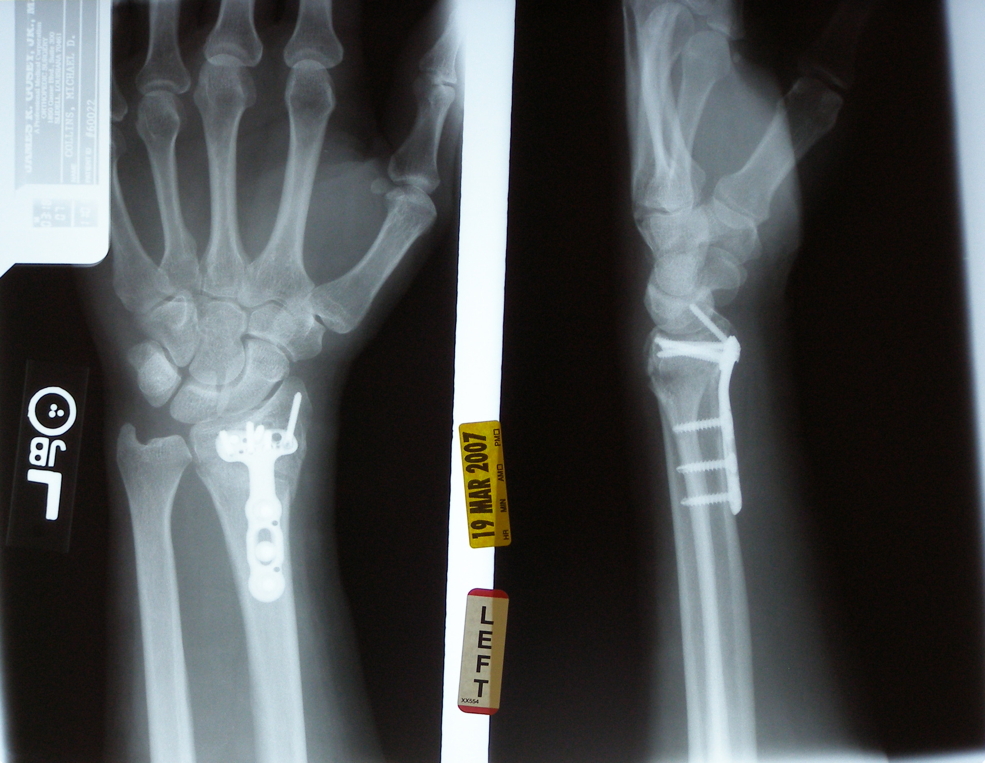
Determination. No matter what approaches you use (such as some of those discussed above) or advantages you have (such as information on a recent sighting), there is no substitute for determination when searching for the Ivory-billed Woodpecker. It takes a long-term effort to have a realistic chance of success. This means going deep into the swamp day after day, month after month, and perhaps year after year, knowing that the species might not even be present in your search area. I regarded the possibility of making a contribution to the conservation of the Ivory-billed Woodpecker to be worthy of such an effort. I was determined to do whatever it took to document this bird in one of the swamps where it had been reported. The above x-ray is an indication of just how far I was willing to go. In February 2006, I had a series of sightings along a concentrated area of English Bayou where two Ivory-billed Woodpeckers were present. I was planning to monitor that area around the same period in 2007 in case the birds returned, but then I fell and broke the radius in my left arm. Refusing to allow an injury to stop me, I kayaked up to the area with a cast on my freshly-broken arm. Determination can be a good thing, but I went too far in this case. The ends of the bones slipped out of alignment, and I had to have surgery to install the plate and screws that appear in the x-ray.